Halal certified: collagen, bone broth, gelatin & tallow
Verified Halal certification across the entire supply chain - from raw materials to packaging.
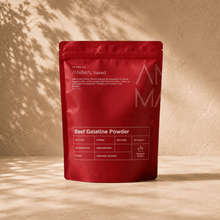
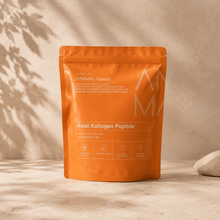
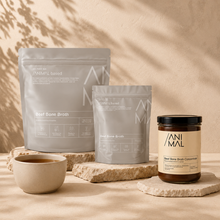
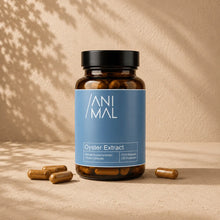
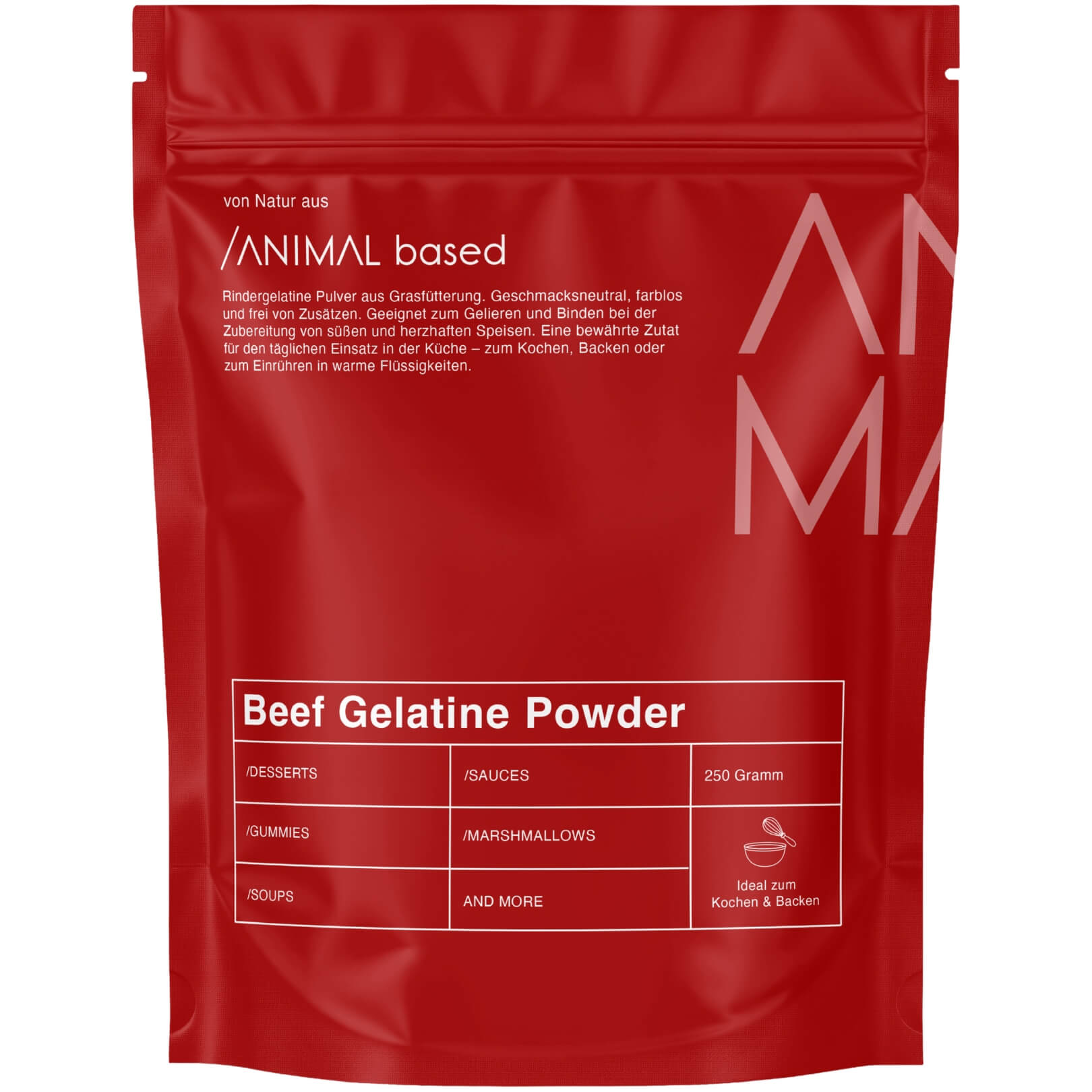
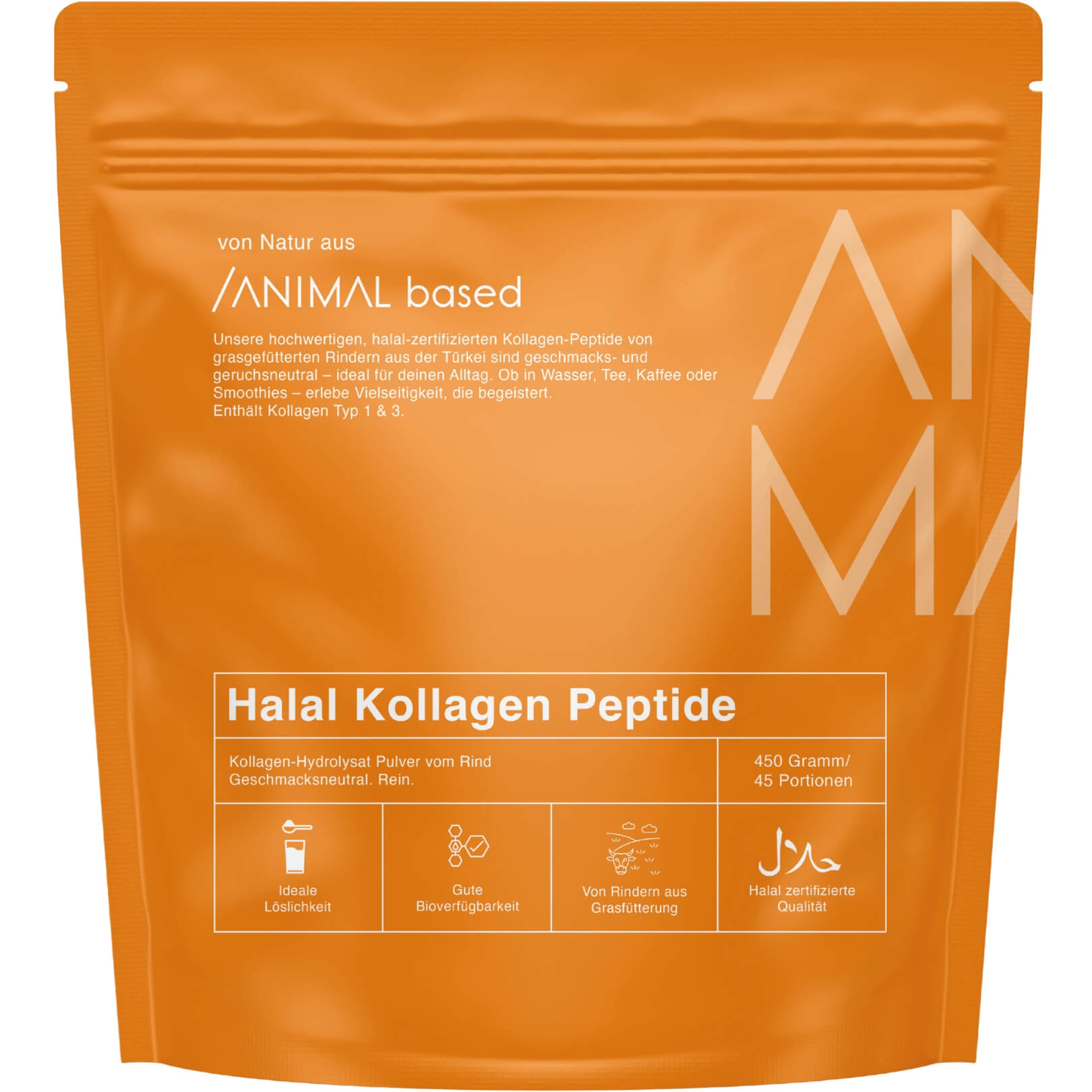
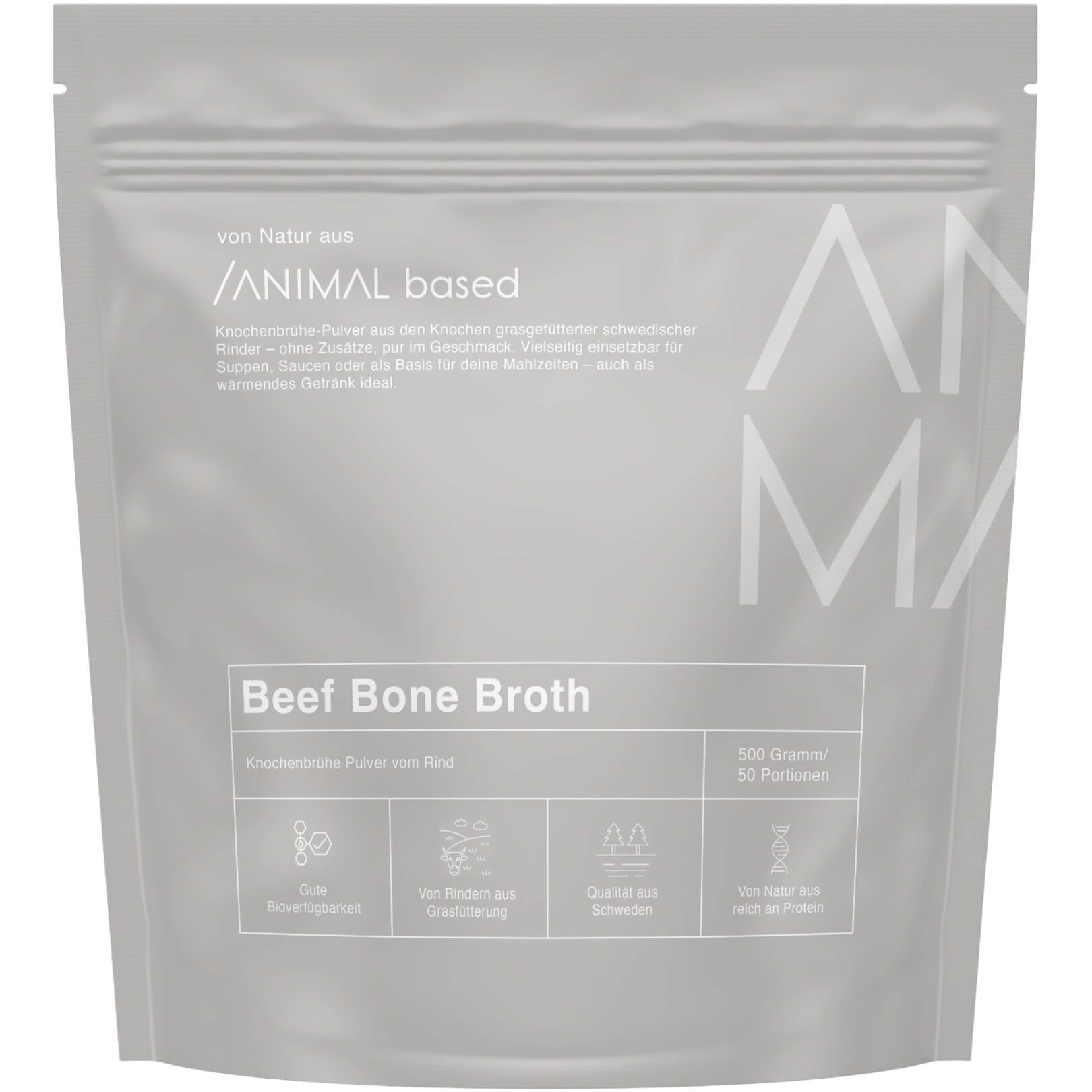
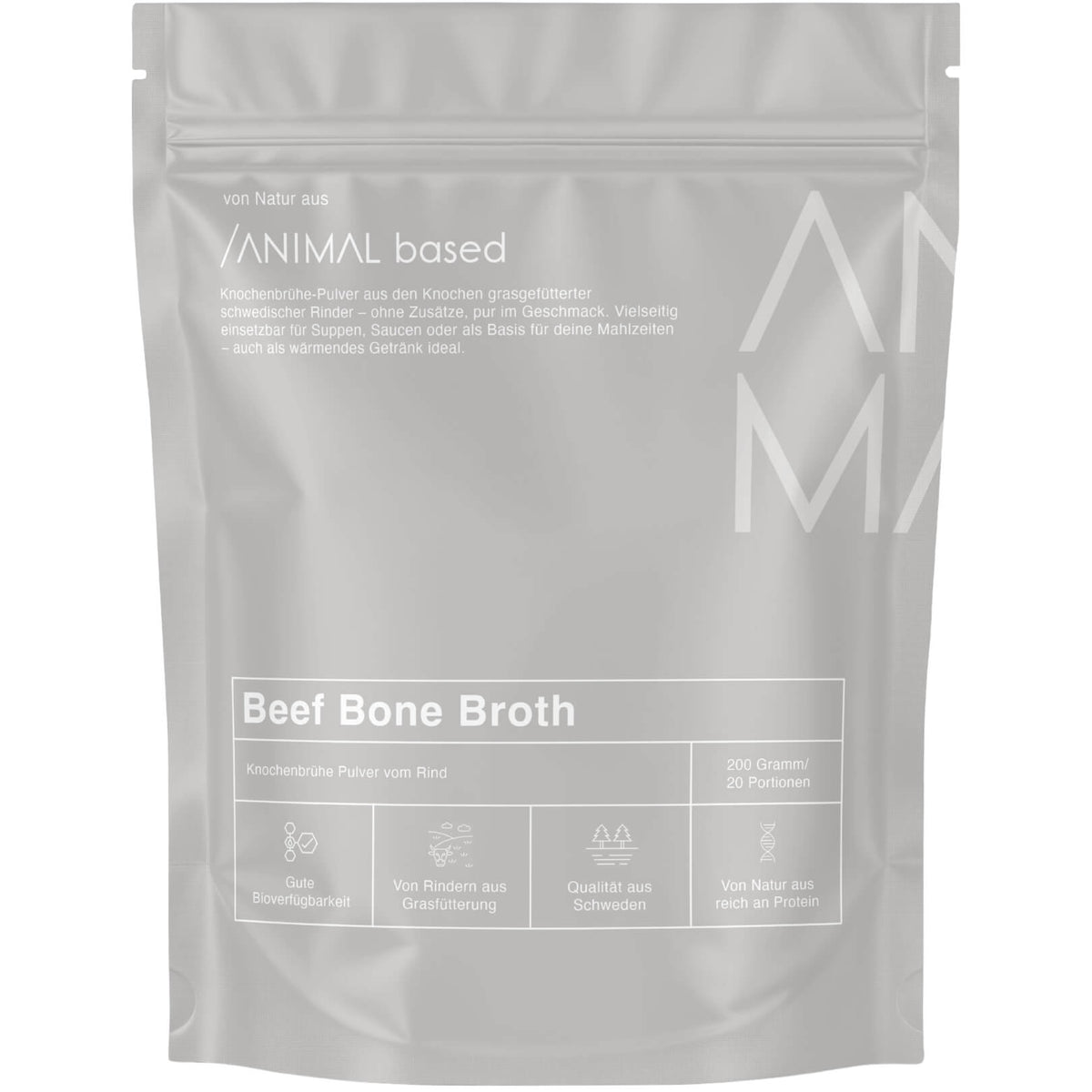
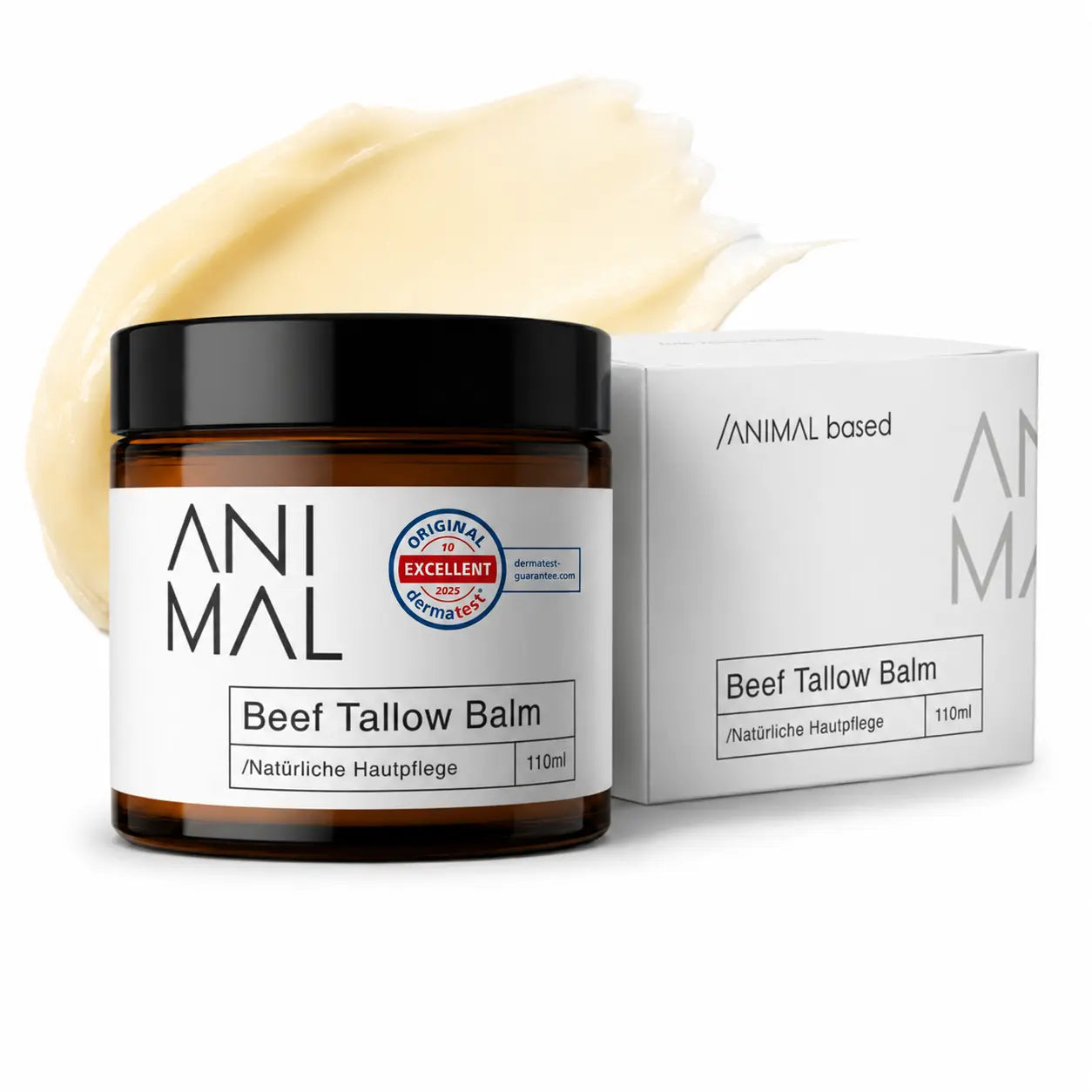
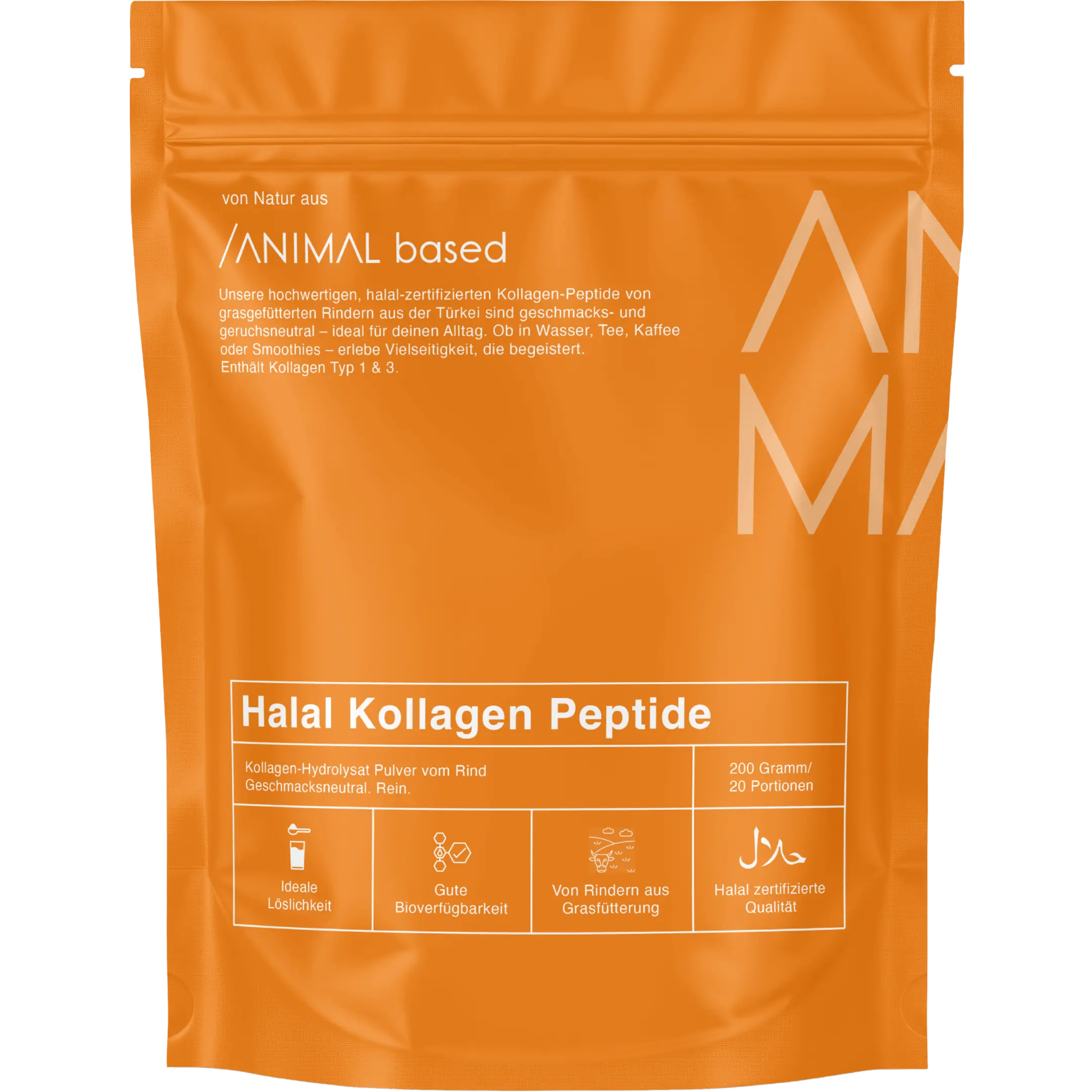
Halal-certified collagen and gelatin are rare on the market. A significant portion of the collagen traded worldwide is derived from pork rind – making it unsuitable for Muslim consumers. Animal Based therefore offers its own halal-certified product line made from bovine raw materials.
Which Animal Based products are halal-certified?
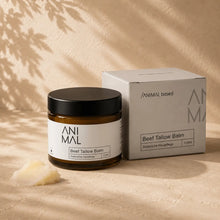
Currently, the Halal Collagen Peptides (collagen hydrolysate in 200 g and 450 g), the Bovine Gelatin Powder, the Bone Broth Powder (200 g and 500 g), as well as the Beef Tallow Balm for skincare are certified.
For the Organic Bone Broth Concentrate, the raw material is certified, but the filling process is not yet – therefore, we do not currently label it as fully halal-certified. Certification for Creatine Monohydrate is in preparation.
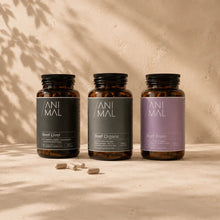
Products outside of this line – such as beef liver, beef organ, or colostrum capsules – are not halal-certified. The labeling on the respective product page is always the definitive guide.
Who certifies the halal products?
Certification is carried out by m-haditec GmbH in Bremen under certificate registration number 150527haevoey, audited according to the General Guidelines on Halal Food of OIC/SMIIC 1:2019 and the Codex Alimentarius CAC/GL 24-1997.
The audit covers not only the raw material but the entire chain: source material, production, and packaging.
Halal-certified or just pork-free – what is the difference?
"Pork-free" only describes what is not included. Halal certification goes further: it requires that the cattle were slaughtered according to Islamic regulations, that no non-halal additives are used during processing, and that filling and packaging are also audited. Without continuous certification, this cannot be verified.
Why is there so little halal-certified collagen?
A significant portion of the collagen and gelatin traded worldwide is derived from pork rind because this raw material is cheap and available in large quantities. Bovine collagen with continuous halal certification places additional requirements on the supply chain, slaughter, and production – and is therefore more complex to procure.
Origin and processing
We specify the origin, processing, and filling of raw materials separately:
- Halal Collagen Peptides: Raw material from grass-fed pasture-raised cattle from Turkey, processing in Switzerland, filling in Germany
- Bovine Gelatin Powder: Raw material from Turkey, processing in Switzerland, filling in Germany
- Bone Broth Powder: Beef bones from Sweden, filling in Germany
- Beef Tallow Balm: Beef tallow from the EU, production and filling in Germany
Additional laboratory testing
Regardless of halal certification, every batch is tested in an accredited German laboratory for microbiology and heavy metals. The test reports are publicly viewable and can be assigned to your own package using the batch number on the packaging.
Frequently asked questions about Halal
Is collagen halal?
Not automatically. A significant portion of the collagen traded worldwide comes from pork rind. Collagen is only halal if it is derived from bovine raw materials and the entire processing chain has been certified – as is the case with our Halal Collagen Peptides.
Is bovine collagen generally halal?
No. The deciding factors are slaughter according to Islamic regulations and a consistently audited processing chain. Bovine raw material alone is not sufficient for this.
Is bovine gelatin generally halal?
No. Gelatin is only halal if the cattle were slaughtered accordingly and the entire processing chain has been certified. Commercially available edible gelatin often comes from pork rind.
Is the collagen from Animal Based free of pork?
Yes. The Halal Collagen Peptides consist exclusively of bovine collagen and are certified.
Is there halal-certified skincare?
Yes, the Beef Tallow Balm is halal-certified. Beef tallow skincare with halal certification is rare on the market.
How long is the certificate valid?
The current certificate was issued on June 1, 2026, and is valid until May 15, 2027.